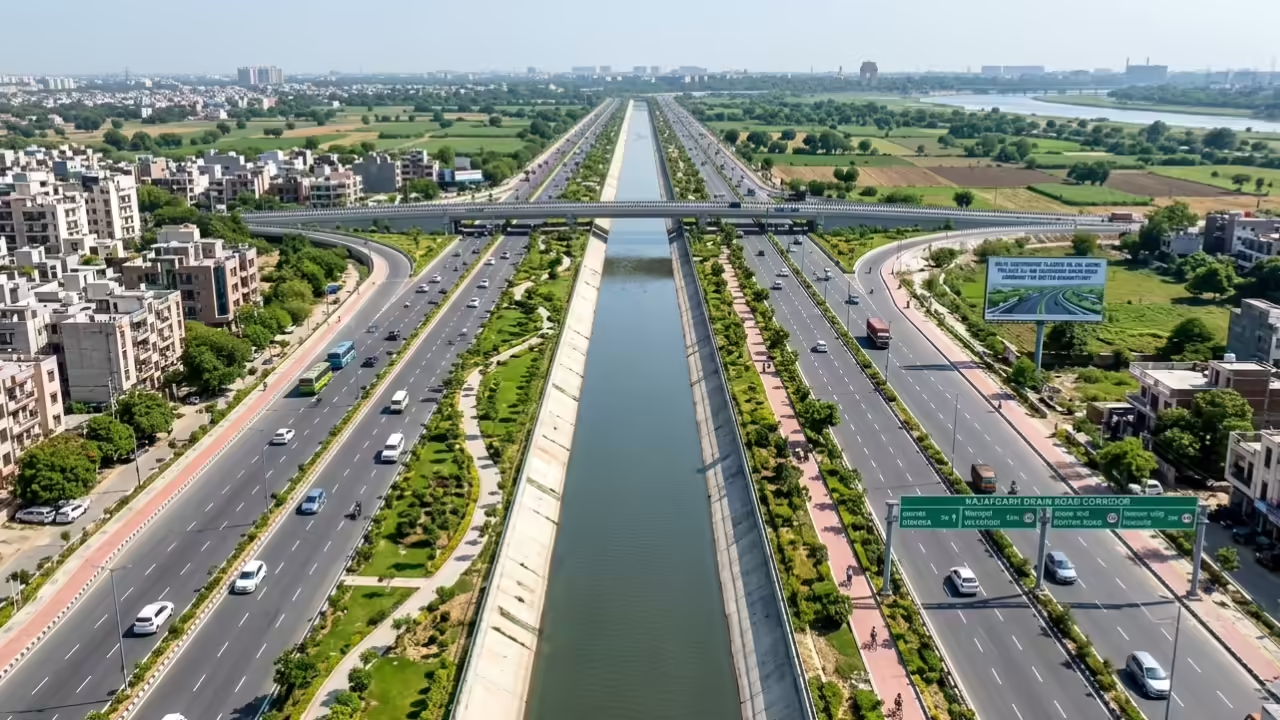
Looking for a lawyer in Najafgarh? Najafgarh sits on the western edge of Delhi NCT, with a distinct character of its own – large agricultural and quasi-agricultural plots, small villages around the central market, and a fast urbanising belt as Delhi development pushes outward. The legal matters out of Najafgarh are different from inner Delhi – more agricultural land, revenue records, regularisation of unauthorised colonies, and a steady share of family, criminal, and consumer work. Most matters are heard at the Dwarka Court Complex now (with some still at Tis Hazari for older matters).
Najafgarh: A Quick Look at the Area
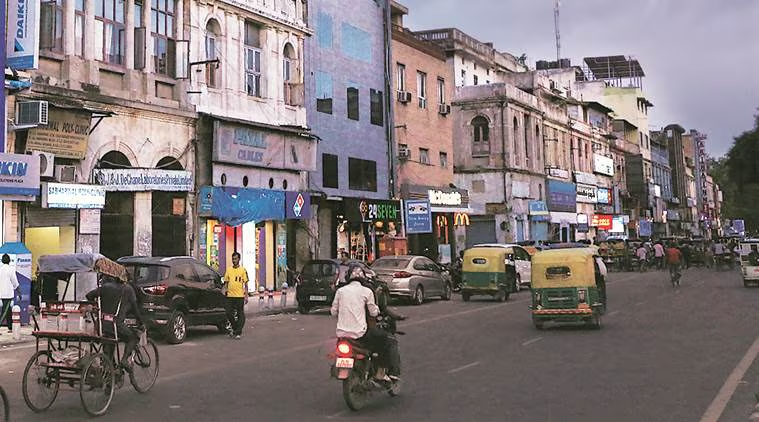
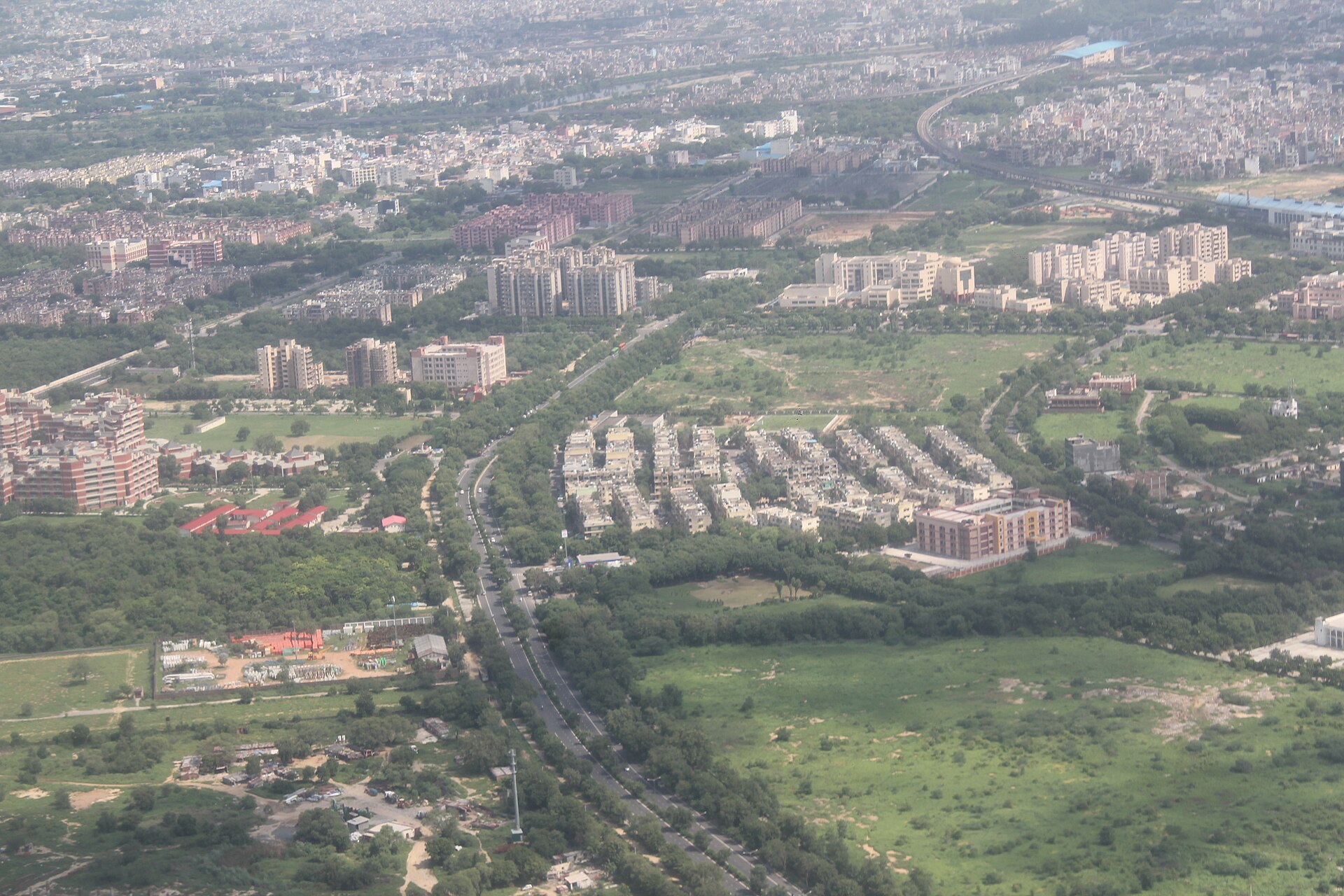
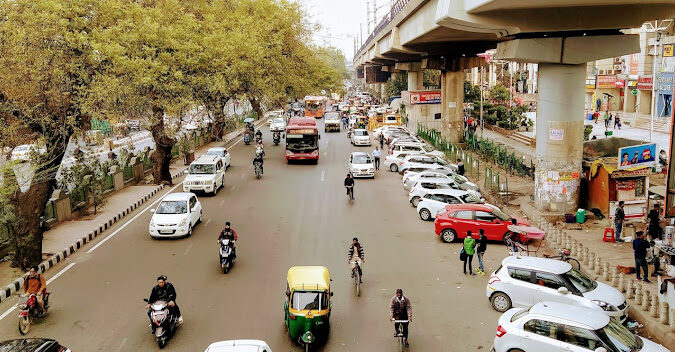
Najafgarh (PIN range 110043) is the largest sub-division of South-West Delhi by area, including the Najafgarh town and a large rural-urban belt covering villages like Dichaon Kalan, Daurala, Nangli Sakrawati, Kharkhari Nahar, and many others. The Najafgarh Road is the main commercial spine, with the Najafgarh Main Market a busy retail and wholesale hub. The Najafgarh Drain (Sahibi River) runs through the locality, and parts of the area sit close to the Haryana border.
Settlement pattern is mixed. Some areas are recognised regularised colonies, some are unauthorised colonies (in various stages of regularisation), some are urban villages with Lal Dora boundaries, and large parts are agricultural land. Many residents are original landowner families with multi-generational holdings, alongside a younger urban migrant population that has bought land or built houses in the regularised pockets.
Legally, Najafgarh has a distinctive flow – agricultural land matters under the Delhi Land Reforms Act, revenue record disputes, regularisation of colonies, family and inheritance with rural patterns, and the standard criminal and civil work from local police stations.
What Kind of Legal Matters Come Up for Najafgarh Residents and Businesses
Agricultural land matters. Under the Delhi Land Reforms Act, 1954, agricultural land in Delhi has specific rules on succession, partition, and transfer. Disputes about who is recorded as the bhumi-dhar, mutation in revenue records, partition between sons (and increasingly daughters under the amended Act), and challenges to mutation orders are common.
Regularisation of unauthorised colonies. The PM-UDAY scheme has been the main vehicle for regularisation in recent years. Disputes about applications, registration, and boundary issues reach the Sub Registrar and on appeal to the Delhi High Court.
Property and inheritance. Both agricultural (under Delhi Land Reforms Act) and non-agricultural (under regular civil law).
Family and matrimonial. Family Court at Dwarka Court Complex.
Criminal. From the Najafgarh police station, mostly local matters.
Consumer. District Consumer Commission for matters within its pecuniary limits.
Cyber fraud. A growing concern.
Section 138. Common with the local trader population.
Which Court Will Hear Your Matter
Najafgarh falls under the South-West Delhi police district. Civil, criminal, family, NI Act, and consumer matters from this district are heard at Dwarka Sub-District Court Complex at Sector 10, Dwarka. Family Court at Dwarka. Some older matters may still be pending at Tis Hazari from earlier allocations.
Higher value or specialised: Delhi High Court for writs, commercial above Rs. 3 crore, IPR; NCLT for corporate / IBC; Delhi RERA at Vikas Bhawan; ITAT for tax appeals.
Agricultural land matters are heard before the Tehsildar, the Assistant Collector, the Collector, and on appeal to the Financial Commissioner / Delhi High Court depending on the stage.
How to Choose the Right Lawyer for a Najafgarh Matter
Three pointers for Najafgarh matters:
First, for any agricultural land transaction or succession, get current revenue records first. Khasra-Khatauni, jamabandi, and mutation history are the foundation. A lawyer-led title search through the revenue office is essential before any sale or partition.
Second, for unauthorised colony registration under PM-UDAY or successor schemes, complete the application with full documentation. Errors at this stage are expensive to fix.
Third, for residents of newly regularised colonies who now want to register sale deeds, the Sub-Registrar may require additional documents (regularisation certificate, payment receipts, layout plan). A lawyer can navigate the documentation.
Documents and Information You Should Have Ready
Bring:
- ID and address proof.
- For agricultural land: revenue records (jamabandi, khasra-khatauni), mutation history, family tree affidavit, will (if any), inheritance documents.
- For property in regularised / unregularised colonies: any sale or possession document, payment receipts, House Tax (if any), regularisation certificate.
- For matrimonial: marriage certificate, financials.
- For Section 138: original cheque, bank return memo, demand notice.
- For criminal: FIR copy, summons.
- For consumer: invoice, payment proof, written complaint to seller.
- A short timeline of events with dates.
Frequently Asked Questions
Which court hears matters from Najafgarh?
Dwarka Sub-District Court Complex at Sector 10, Dwarka, for the South-West district. Some older matters may still be pending at Tis Hazari.
How is agricultural land in Najafgarh inherited?
Under the Delhi Land Reforms Act, 1954 (as amended). The Act has specific rules on succession – originally favouring male heirs, now amended to give daughters equal rights. Mutation in revenue records is by application to the Tehsildar with the death certificate, family tree affidavit, and any will.
My family’s land in a Najafgarh village has not been mutated since my grandfather’s death. What now?
Apply to the Tehsildar for mutation with the death certificate, family tree affidavit, and any will. If multiple heirs disagree, the Tehsildar may refer the matter for civil determination. A partition can then be done either by mutual deed or by partition order.
My colony in Najafgarh was unauthorised – we are now applying under PM-UDAY. What is the lawyer’s role?
A lawyer can help with the application, ensure the documentation (proof of possession, payment receipts, layout, identity) is complete, respond to deficiency notices, and handle any appeal. Errors at the application stage delay registration.
Can I sell my newly regularised Najafgarh property?
Once registration under PM-UDAY (or successor scheme) is complete and the conveyance deed is executed, you can sell. The buyer’s lawyer will look for the conveyance deed, regularisation certificate, payment receipts, mutation, and standard title chain.
My elderly relative in a Najafgarh village was scammed. What is the recovery procedure?
Within 24 hours, call 1930 and file at cybercrime.gov.in. File a complaint at the local cyber cell or the Cyber Police Station. Then a written representation to the bank for chargeback under the RBI’s limited liability circular for unauthorised electronic transactions, followed by an FIR.
Can a Najafgarh lawyer also handle my Delhi High Court matter?
Yes, many South-West Delhi lawyers also appear at Delhi High Court. What matters is whether the lawyer regularly appears in the specific bench and matter type.
Talk to a Lawyer in Najafgarh – SASA Legal
If you are looking for a lawyer in Najafgarh for any of the matters discussed above, SASA Legal is happy to help. The first conversation is the most important one, and we keep it simple.
Three easy ways to reach us:
- WhatsApp (fastest): +91 80621 80519 – send a one line description of your matter and we will revert with the next step.
- Phone: +91 80621 80519 (Mon to Sat, 10:00 AM to 7:00 PM)
- Email: office@sasa.legal
Office: L-34, Outer Circle, Connaught Place, New Delhi – 110003
We routinely act for clients who live or do business in Najafgarh and the surrounding parts of Delhi NCR. If your matter is urgent (arrest, search, eviction notice, freezing of account), please call rather than email so we can act on the same day.
Najafgarh’s legal life is a mix of urban and rural, regularised and unregularised, agricultural and residential. The right lawyer is one who is comfortable in revenue offices and civil courts both. If we can help you navigate any of these, we are happy to start with a focused first conversation.
About the Author
Advocate Keshav Agarwal is the founder of SASA Legal, a Connaught Place based law practice that advises individuals and businesses across Delhi NCR on civil, criminal, family, commercial, consumer, cyber, property and arbitration matters. SASA Legal acts before the Supreme Court of India, the Delhi High Court, all Delhi district courts (Saket, Tis Hazari, Patiala House, Karkardooma, Rohini, Dwarka, Rouse Avenue), and key tribunals (NCLT, NCLAT, NCDRC, DRT, NGT, ITAT, CAT).
Contact: +91 80621 80519 | office@sasa.legal | L-34, Outer Circle, Connaught Place, New Delhi – 110003
Disclaimer
This article is published for general information and public legal awareness only and does not constitute legal advice or solicitation under Rule 36 of the Bar Council of India Rules. Readers should not act on the contents of this article without taking independent legal advice from a qualified advocate based on the specific facts of their matter. SASA Legal disclaims all liability arising from any action or decision taken on the basis of this article. Information is current as of 4 May 2026 and may change with amendments to law, procedure or court practice.